
For three years the grow-out has lived in a pair of 40 gallon tanks plumbed off the main display. It worked, and it taught us a lot, but it capped how much coral we could raise at once. If The Apothecary is going to open with real inventory and stay stocked through drops, the whole operation has to get dramatically bigger. So it is getting bigger, starting with the tank everything else gets built around.
The plan is a ten-foot acrylic display, 120 by 30 by 30 inches, running on its own dedicated sump. It becomes the new centerpiece of the fish room. To give it the space, most of the other tanks come out of the fish room entirely and move elsewhere in the house, leaving this room to the lab, the plants, and the ten-footer. Every system stays independent rather than getting plumbed into one giant loop, and that is deliberate: independent systems mean a problem in one tank stays in that tank instead of spreading to everything at once. Across the whole house the water volume will pass 850 gallons once everything is running again. On the main display, a big body of water is the point on its own: the larger the volume, the more stable the chemistry, and stable chemistry is what lets coral grow fast without swinging into trouble.
What this tank has to do
It is both the centerpiece of the room and a working grow-out, and it has to earn its footprint. Three jobs, in priority order:
- Grow out mother colonies. Fast, healthy, color-stable growth on the pieces we frag from.
- Hold frags through healing and encrusting before they ever get listed.
- Prove the corals in a display before we sell them, so nothing goes out that has not lived under our lights and our flow first.
First things first
The very first purchase for this build was not for the new tank at all. It was a 150 gallon Rubbermaid stock tank, because before anything gets torn down, everything living in the room needs somewhere safe to go. You do not start a move you cannot finish.
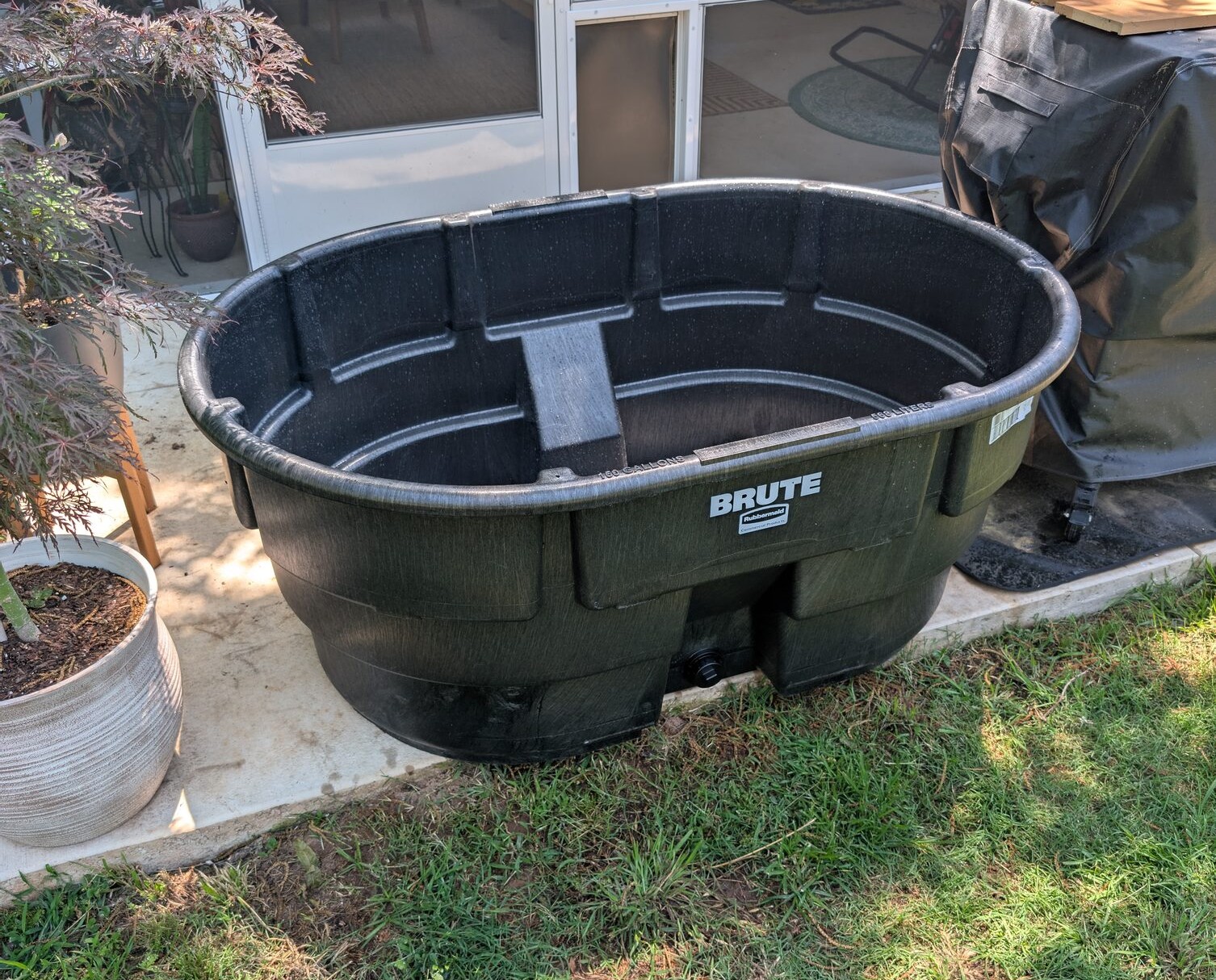
The constraints
A tank this size is mostly a plumbing and structural problem, not an aquarium problem. This build is acrylic rather than glass, and even so a ten-foot tank full of saltwater and rock is thousands of pounds sitting in one place. The floor has to carry it, the stand has to distribute it dead level across ten feet, and the plumbing has to move serious water through the display and sump without turning the fish room into a wind tunnel.
Everything after this post is the actual build. No time-lapse montage skipping the hard parts. If something fails, it goes here too.
Next entry: making room, starting with the two 40s.