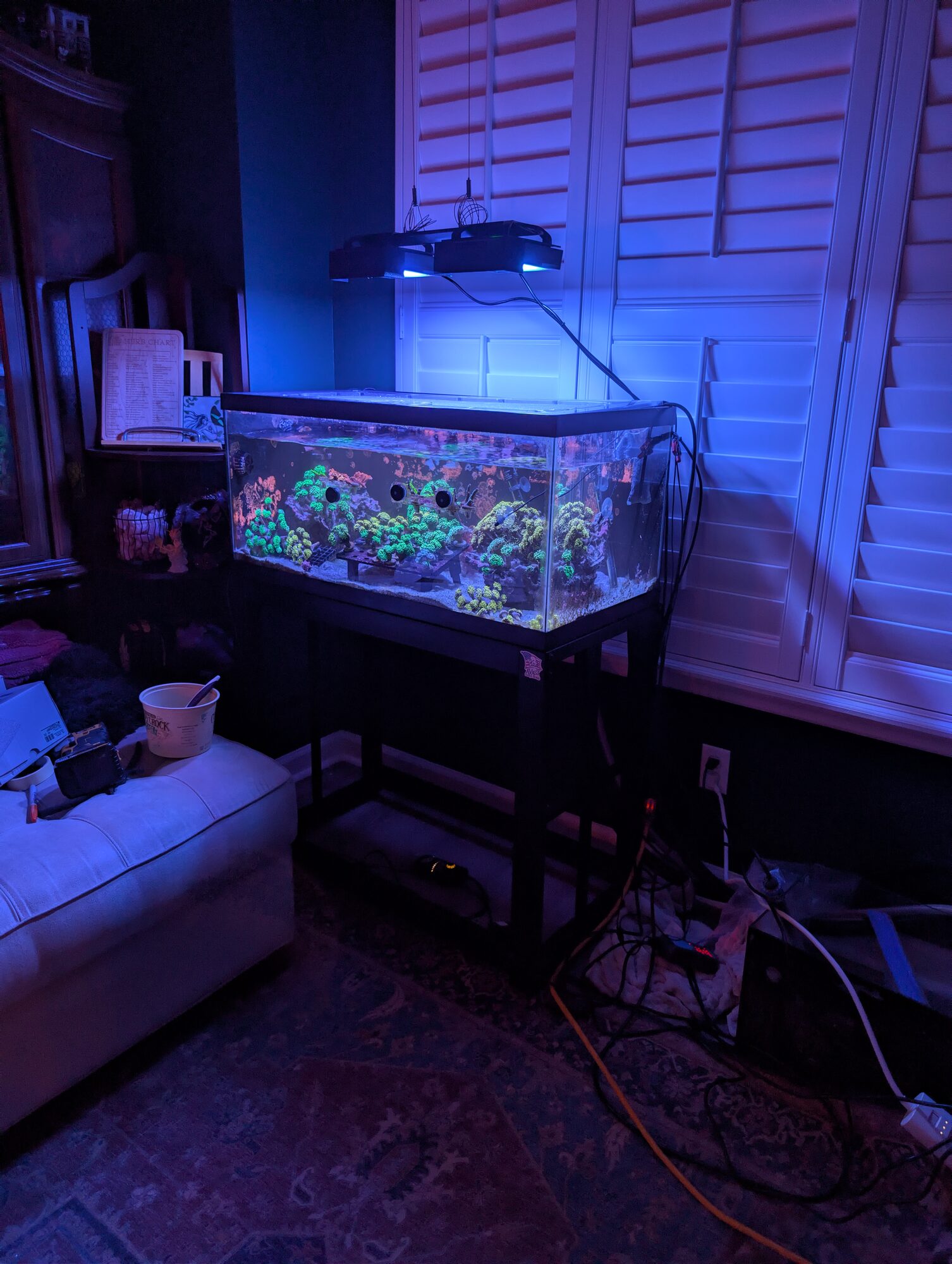
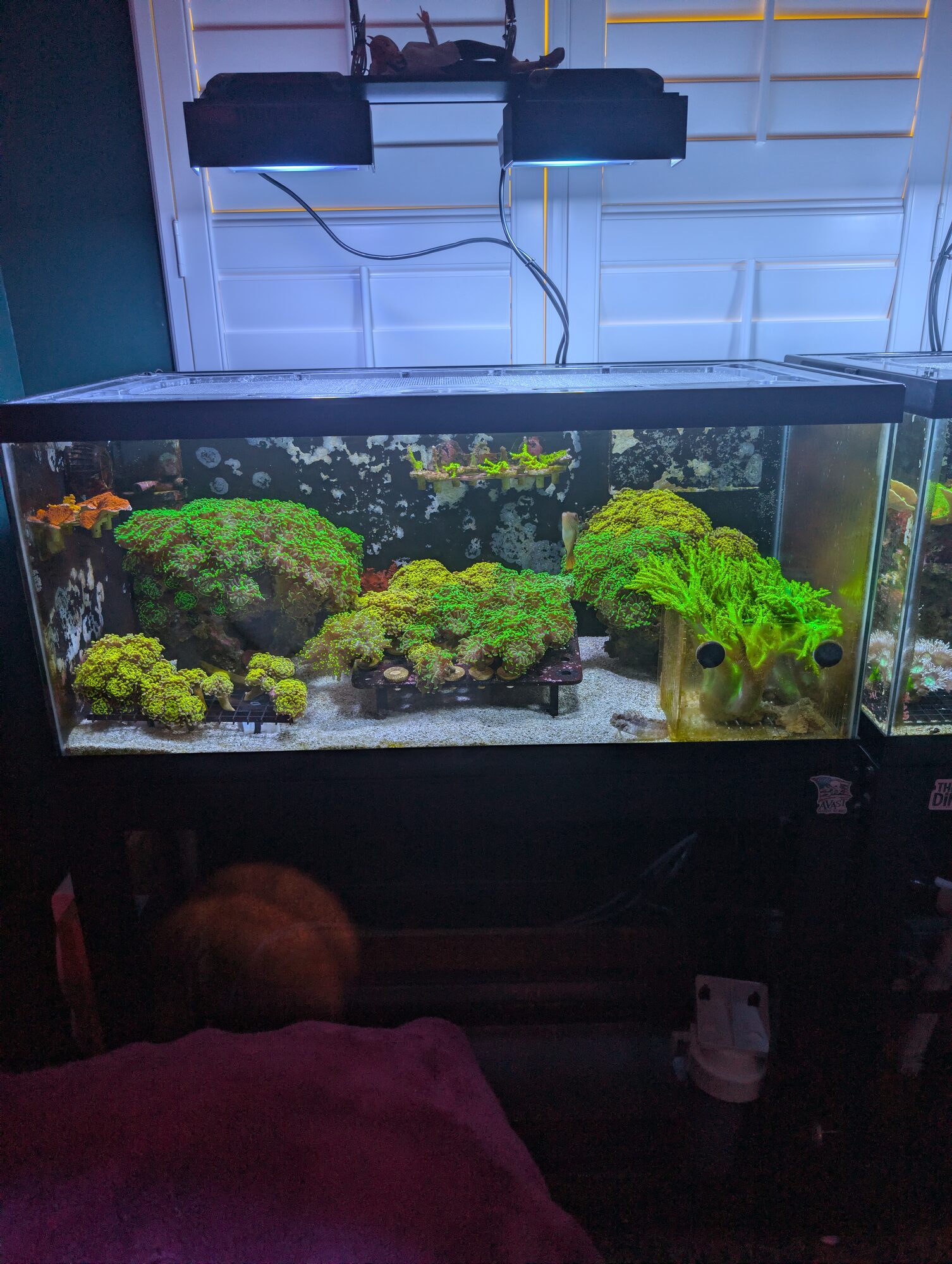
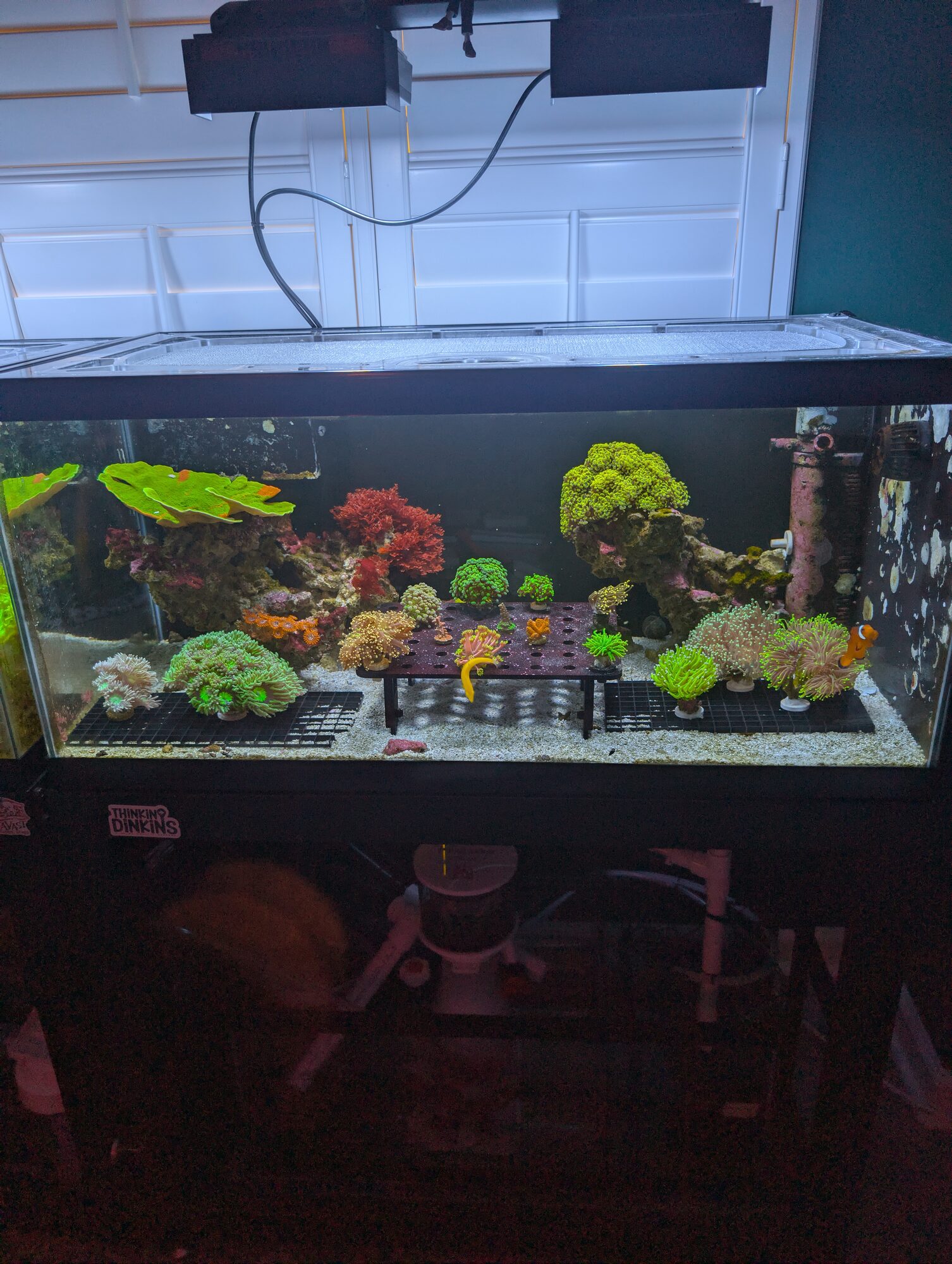
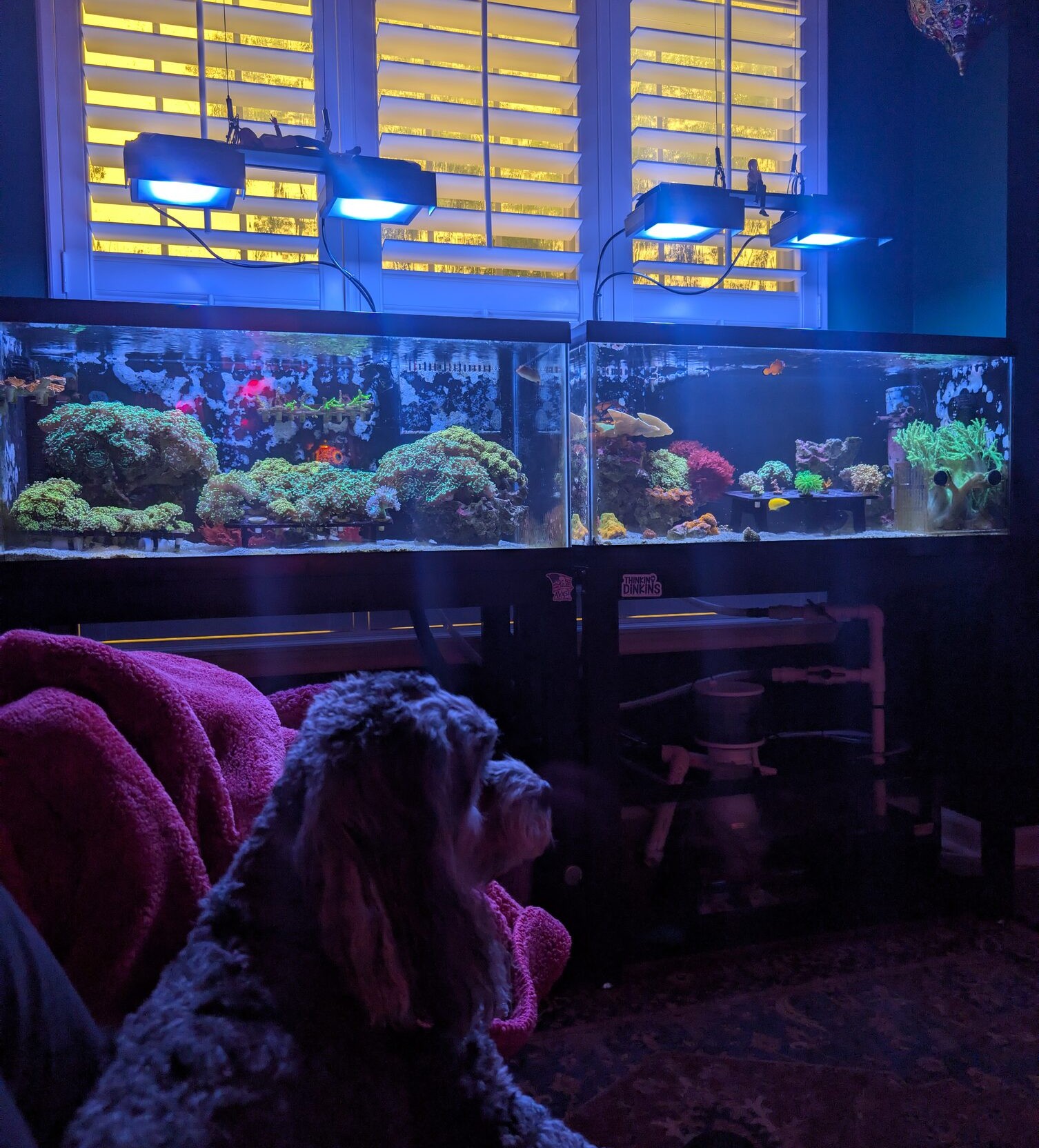
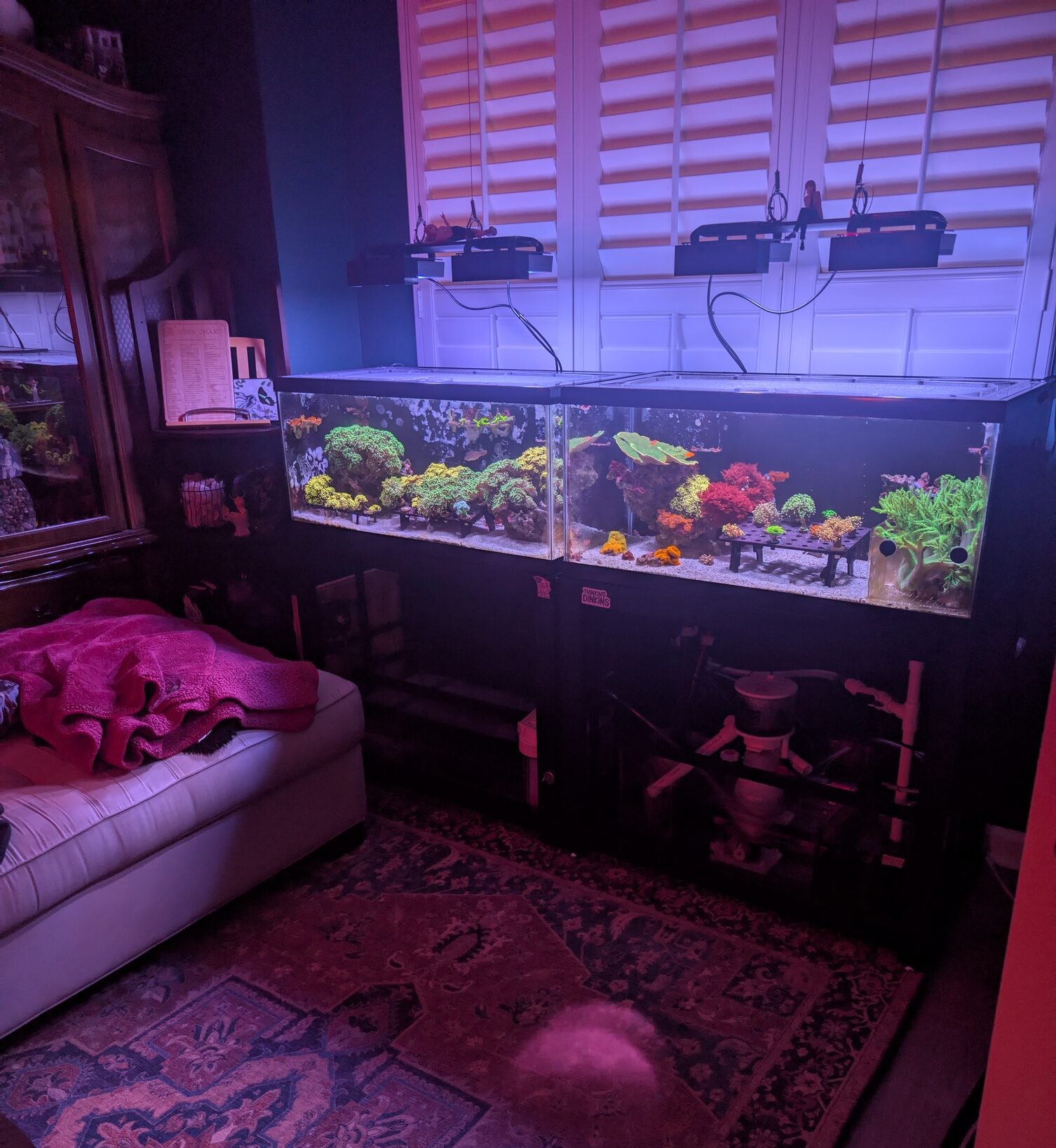
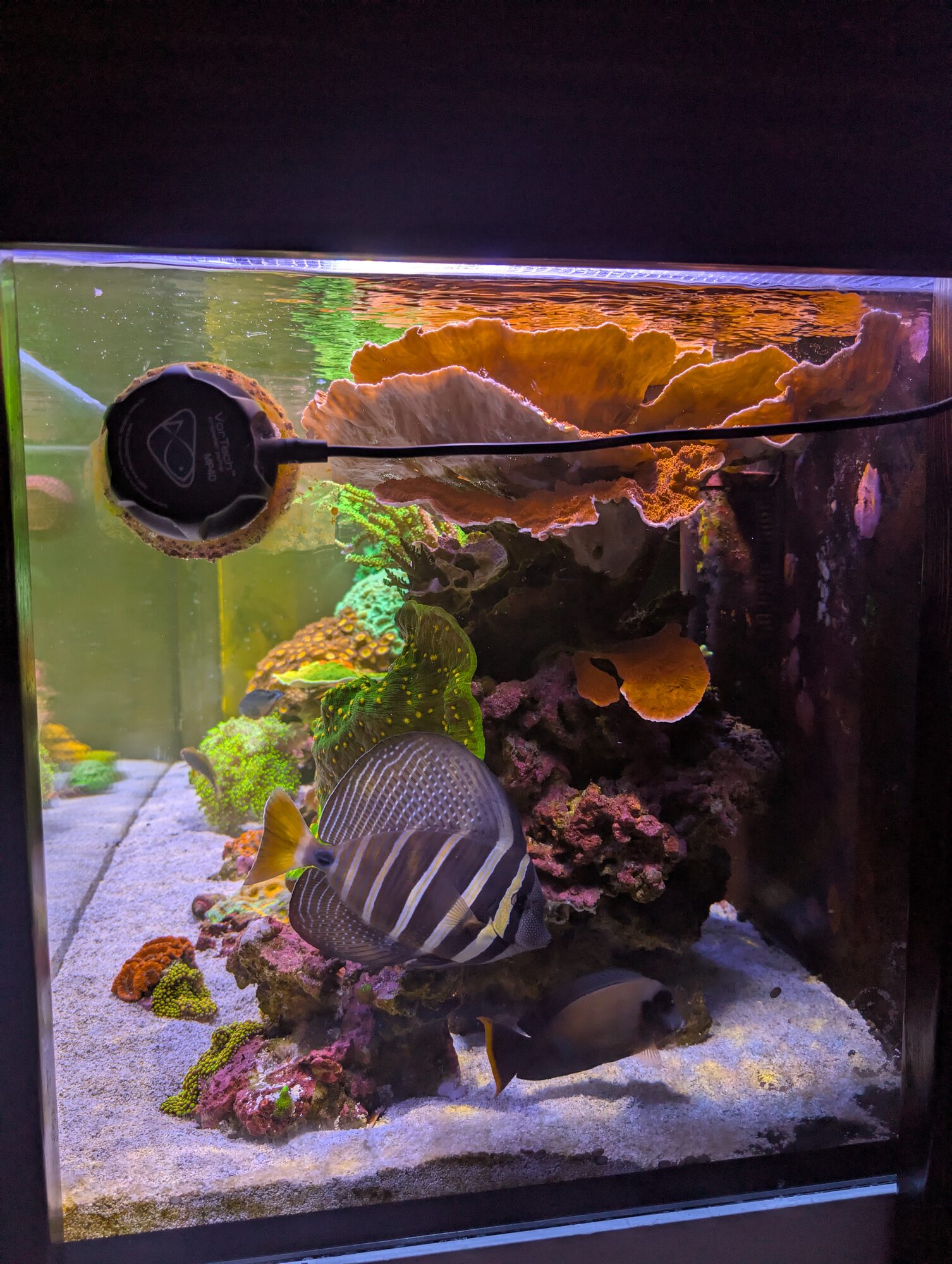
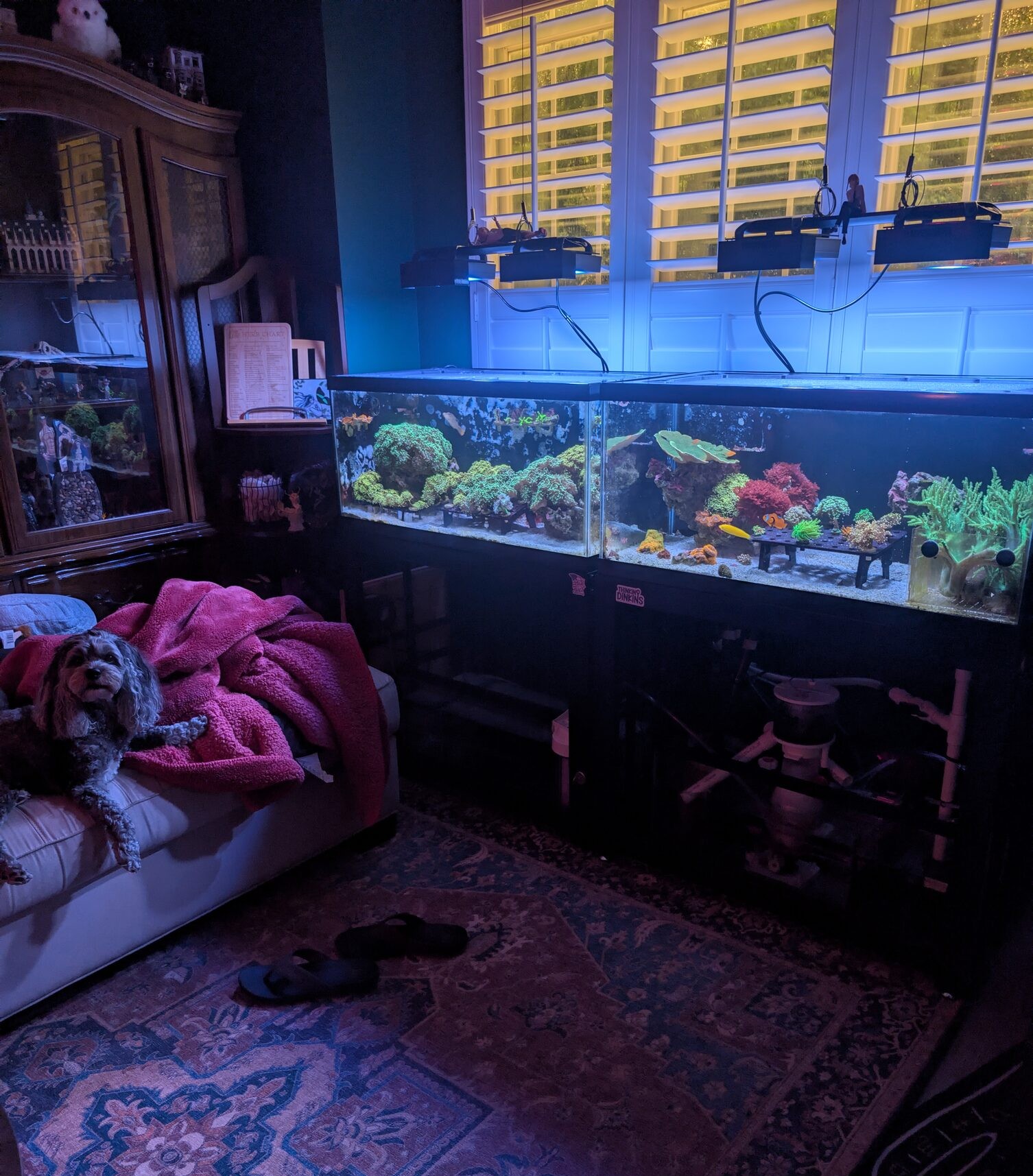
The two 40 gallon grow-outs used to hang off the main display's plumbing. Making room for the ten-foot build meant cutting them loose and giving them a system of their own. That is a good thing anyway: independent filtration means they can be dosed, treated, or shut down without touching the main reef.
A sump from scratch
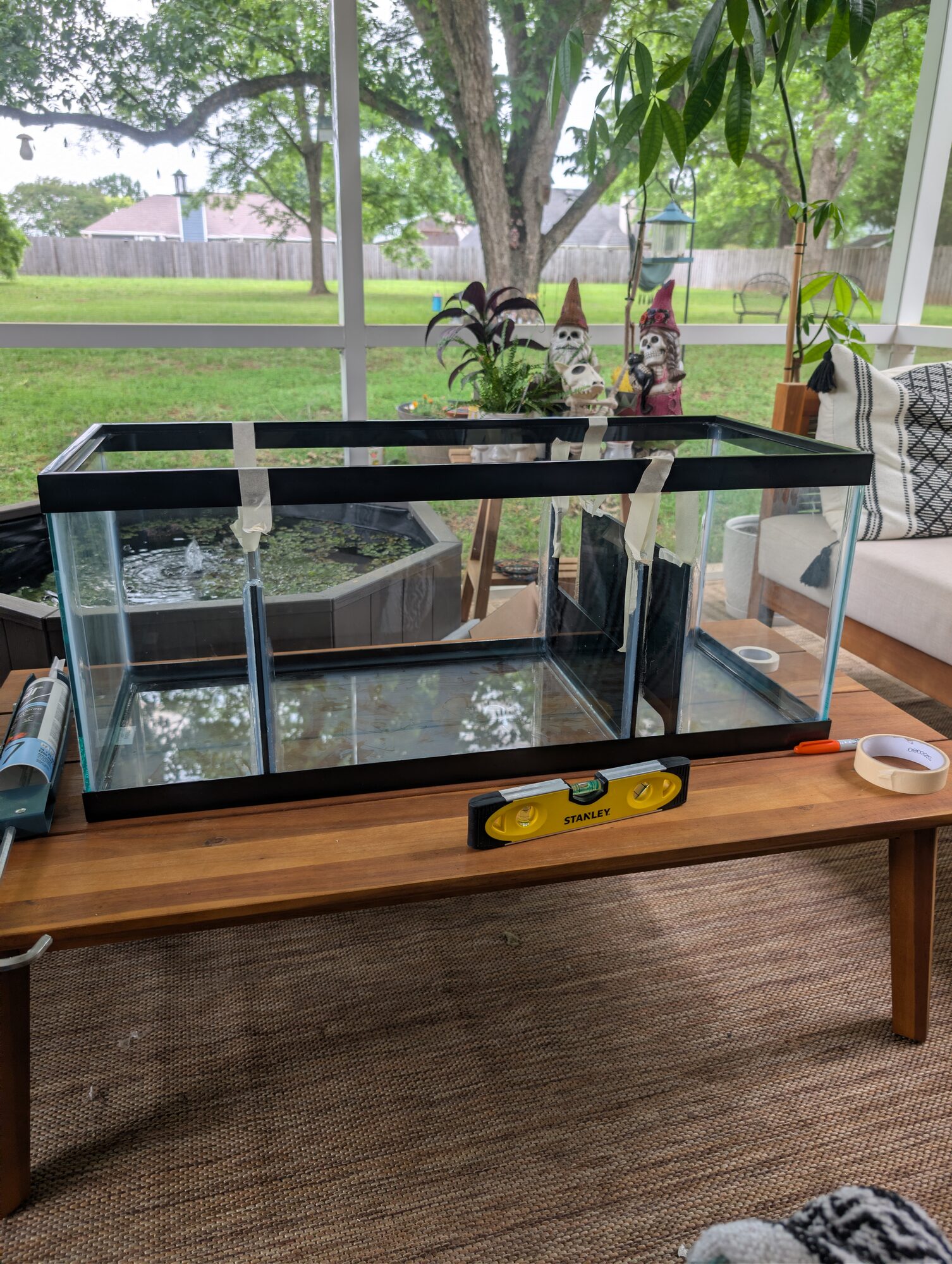
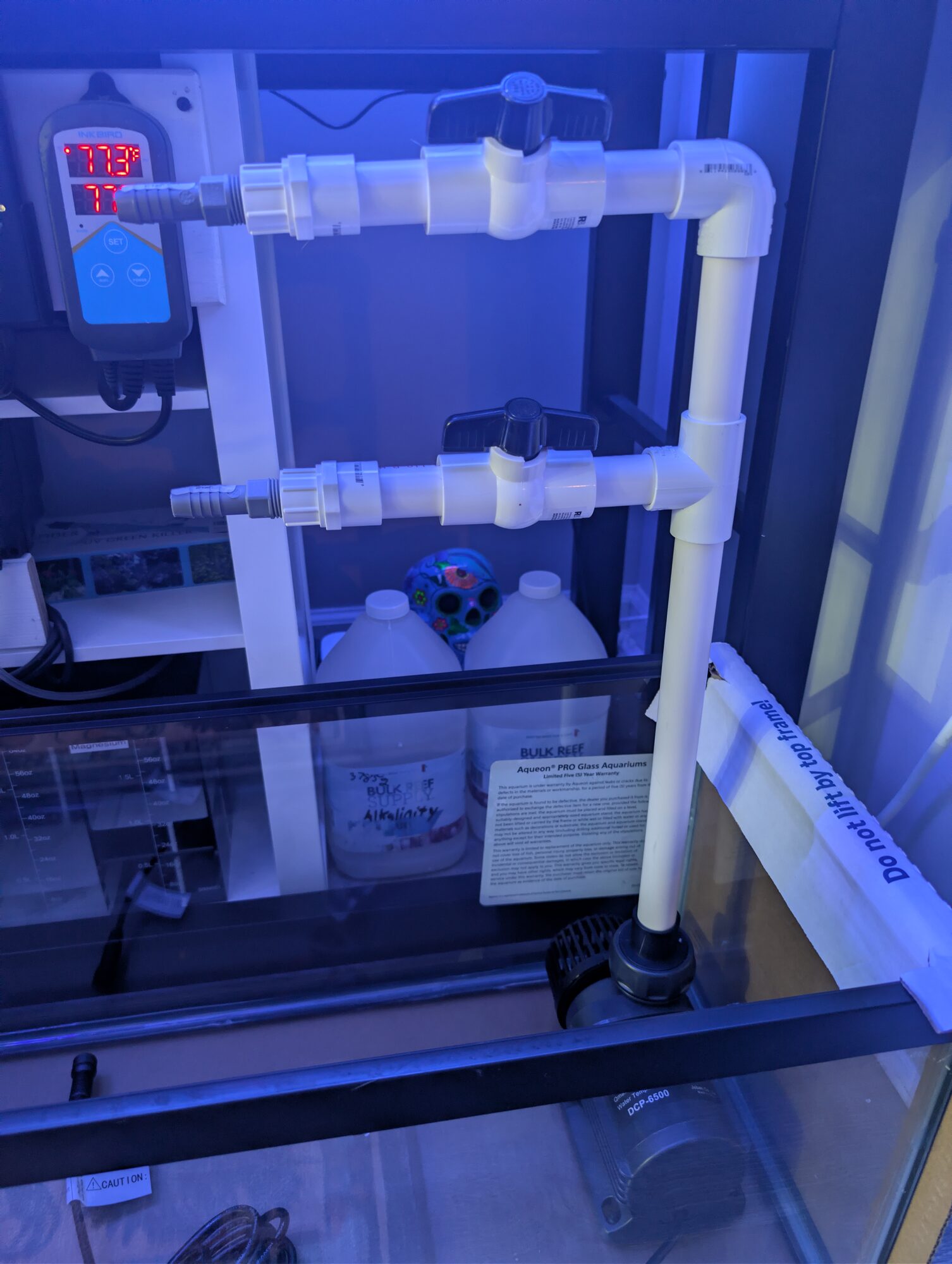
The first job, back on May 9, was filtration. Rather than buy something that almost fit, I built a sump to the exact footprint I had: a glass tank with cut baffles set in reef-safe silicone for the bubble trap and return sections, plus a return manifold so the reactors and accessories all run off one pump instead of a nest of separate ones.
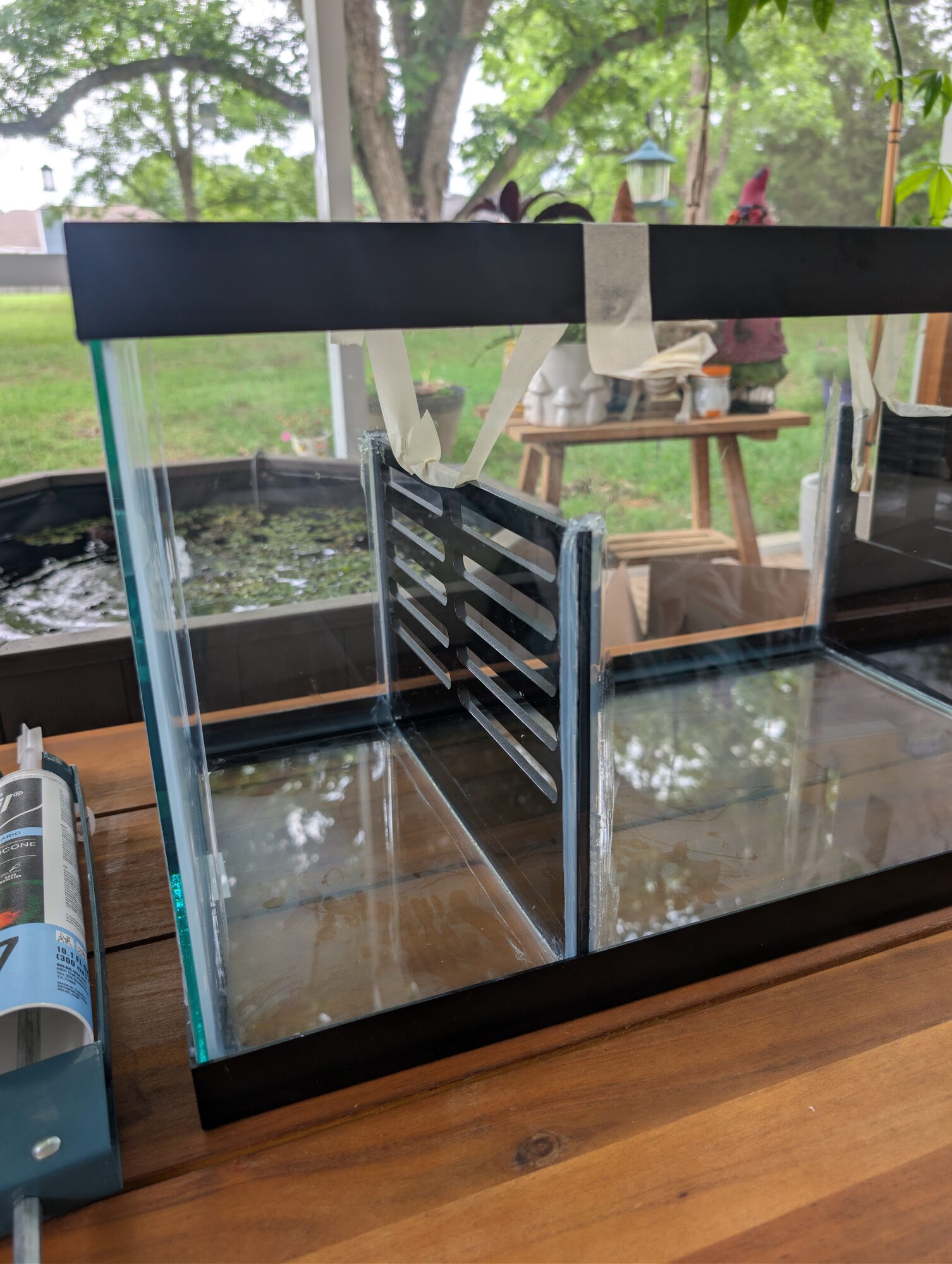
Building plumbing on a table, at a comfortable height, with full access to every side, is a hundred times easier than trying to do it later crammed under a full tank. The silicone got a full cure before a drop of water touched it.
Move day
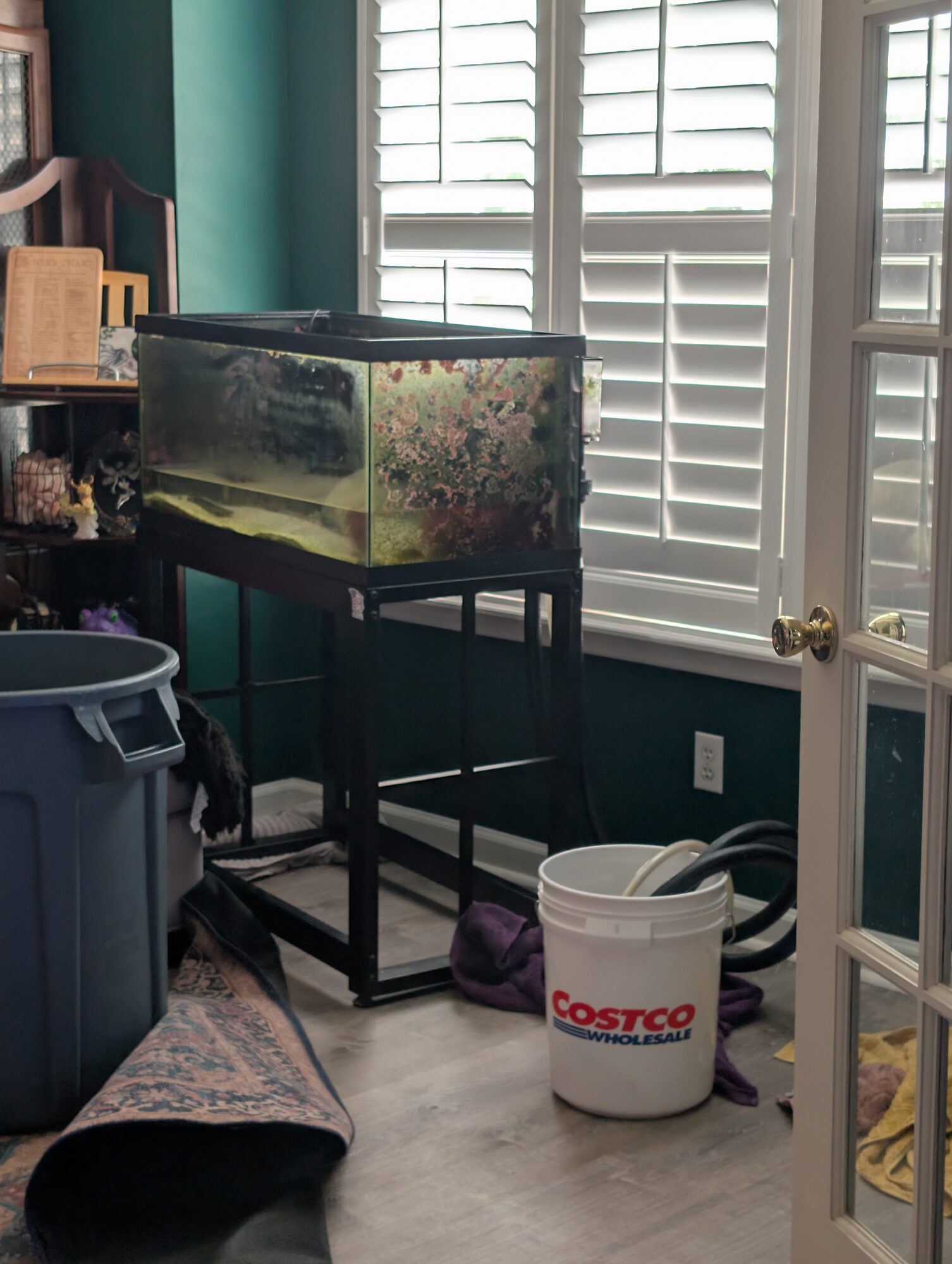
On May 17 the 40s came down. There is no graceful way to relocate a running tank, only a fast and careful one. Livestock into holding, water saved where possible, and the tanks themselves emptied enough to move without flexing.
Plumbed, wired, and back up
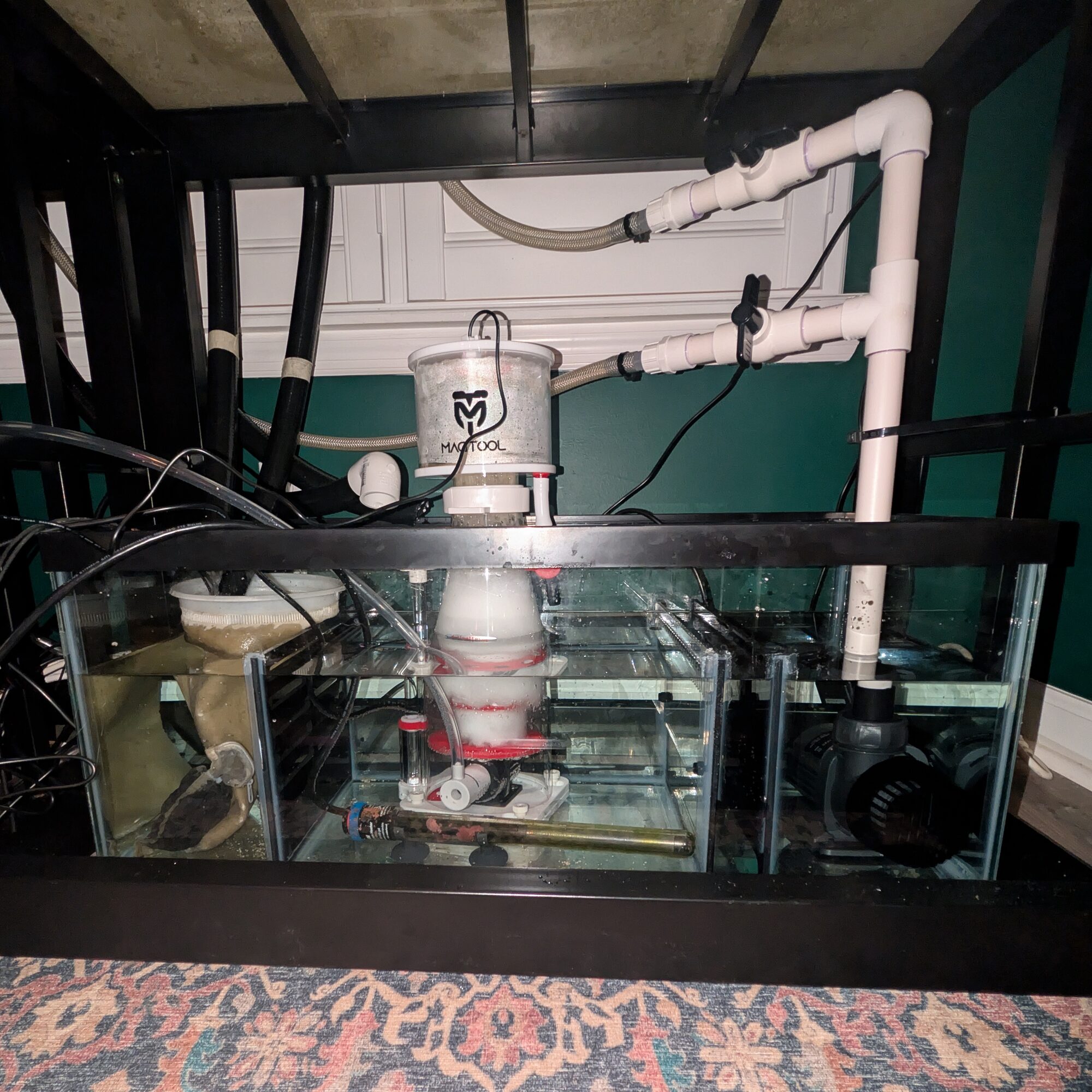
By May 18 the new sump was under the 40s and plumbed in. May 20 was the electrical: dedicated outlets for the pumps, heaters, and lights instead of a power strip doing a job it was never meant to do.
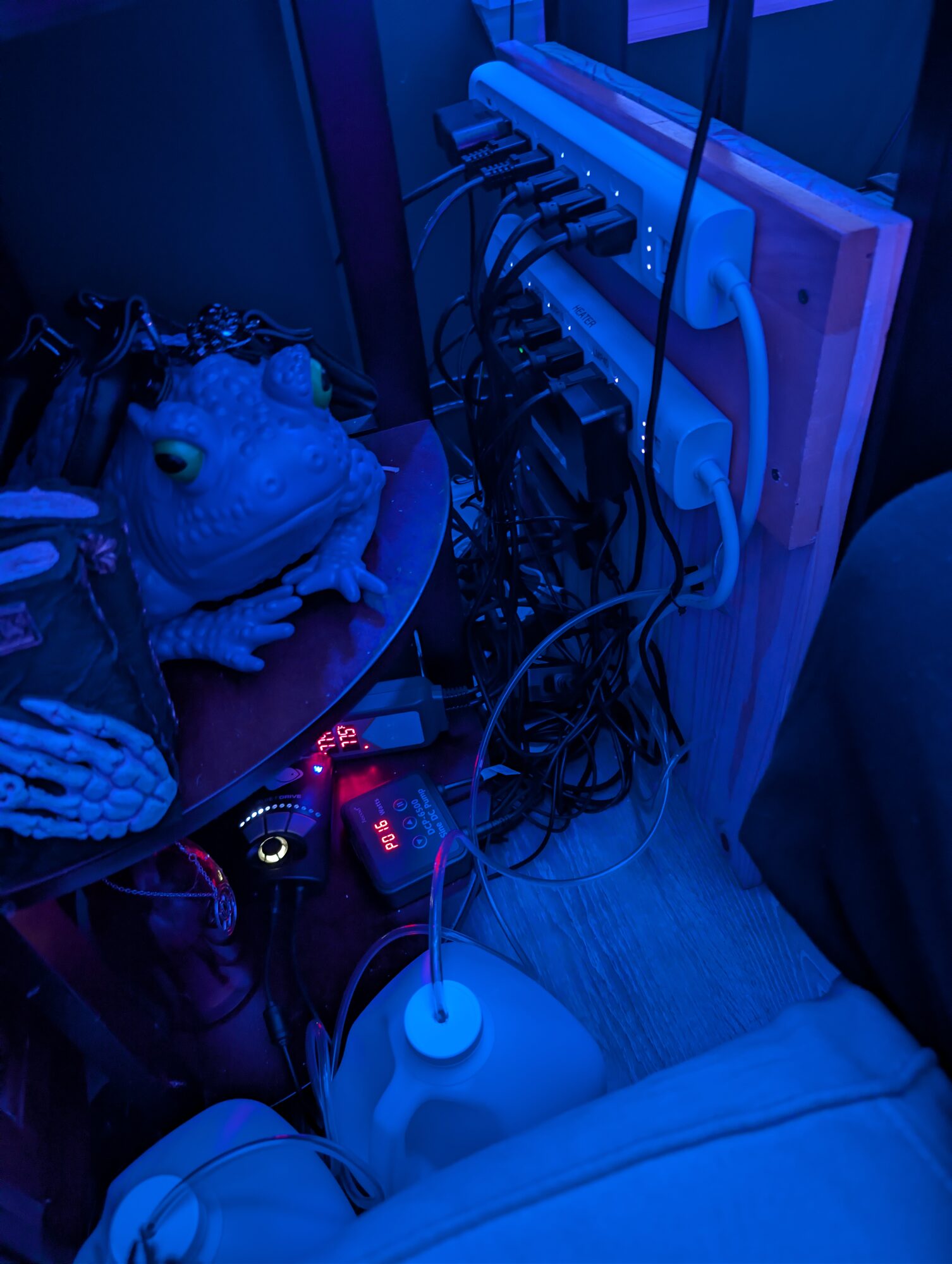
By the end of the month they were settled, clear, and stable on their own system. Nothing lost in the move, which is the only score that counts.
With the grow-outs off on their own, the next job is the harder one: emptying the main display into temporary housing. That is the next entry.