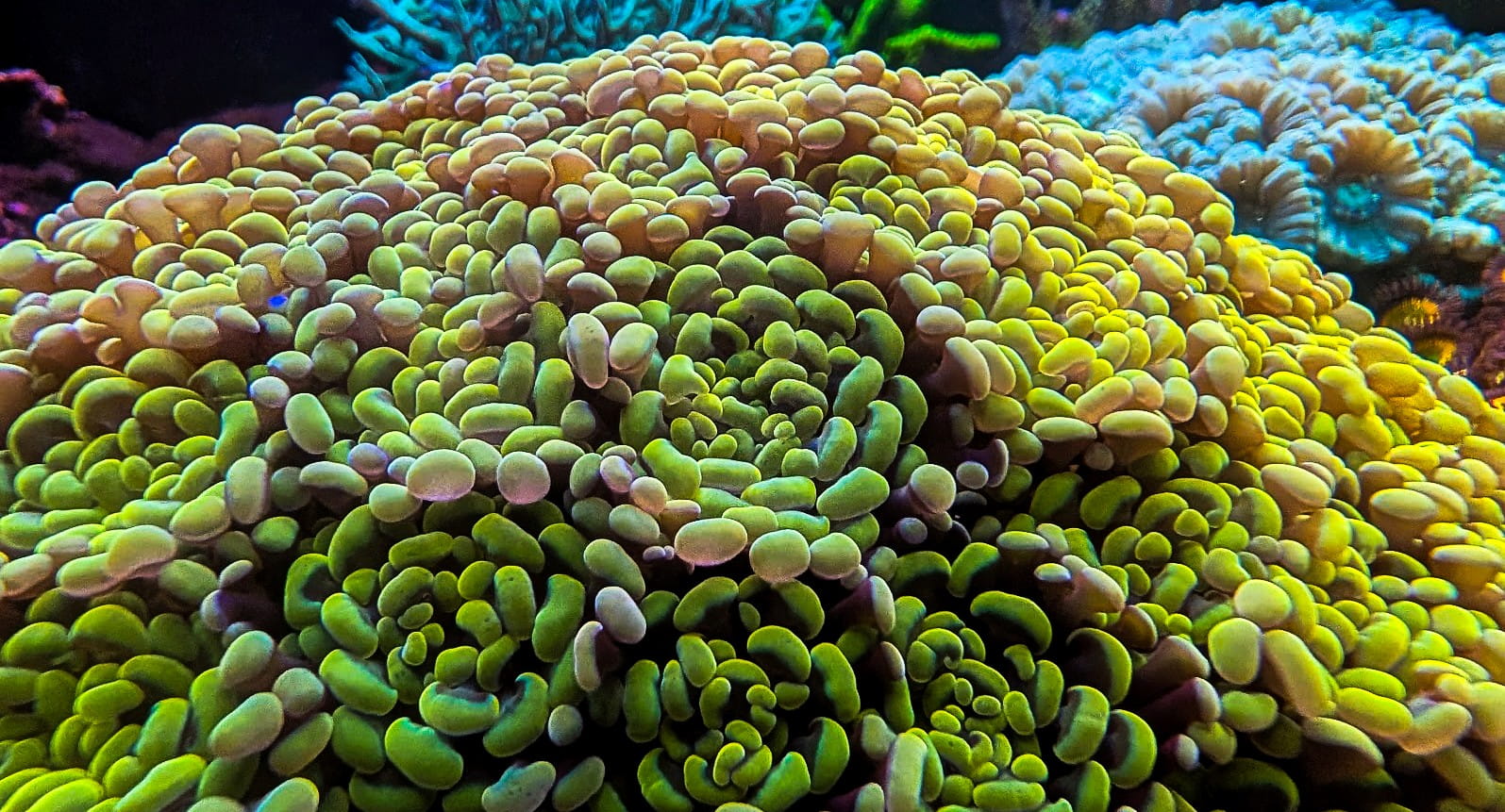
Hammer coral is one of the most rewarding LPS corals you can keep. Hardy enough for a first reef, visually striking enough for a showpiece system, and one of the most consistent sellers in the frag market.
1. Overview
Hammer corals belong to the genus Euphyllia and come in two distinct growth forms. Wall hammer (E. ancora) grows as a single flat plate with all polyps fused along a shared wall. Branching hammer (E. parancora) grows individual heads on separate branches, making it significantly easier to frag and far more sought after in the hobby.
Both forms produce long, flowing tentacles tipped with a distinctive hammer or anchor shape. Under good lighting these tips fluoresce green, gold, purple, or teal depending on the morph. The WWC Rainbow branching hammer is one of the most recognizable named morphs in the hobby, with tentacle tips that shift color as the colony matures.
Hammer coral is moderately aggressive. Sweeper tentacles extend 4 to 6 inches at night and will sting neighboring corals. Give it space when placing it in a mixed reef.
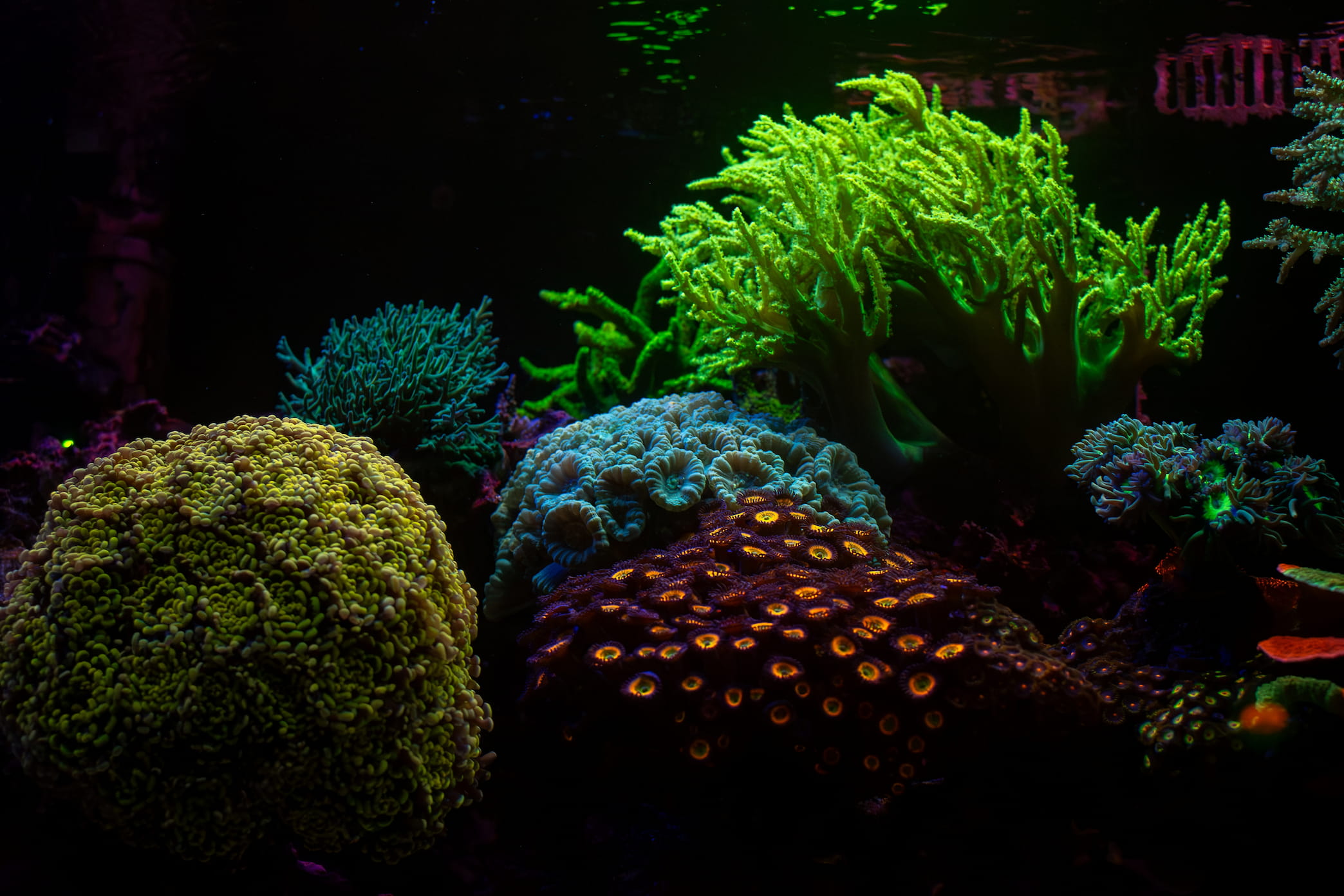
2. Water Parameters
Euphyllia is a forgiving genus but performs best when chemistry is stable. Alkalinity swings are the most common source of stress and recession in our experience. Consistent parameters matter more than hitting any single number perfectly.
Hammer coral does not do well in ultra low nutrient systems. If nitrates and phosphates are undetectable, the coral will brown out or begin to recede. A small amount of nutrients in the water column is beneficial.
3. Lighting
Hammer coral is a moderate light species. It does not need high PAR and will bleach under intense direct light without acclimation. Most hobbyists see the best color and extension in the 50 to 150 PAR range.
Start hammer coral in the lower to middle third of the tank. Watch how the polyps respond. Tentacles staying retracted with pale tissue means the light is likely too intense or the flow too direct. If the coral is consistently closed and browning, it may need more light.
Named morphs like the WWC Rainbow show the most color under a balanced blue to white spectrum. Pure blue heavy lighting washes out the yellow and gold tones in the tips.
4. Flow
Hammer coral prefers medium, indirect flow. Tentacles should be gently moving and extended, not whipping around or flattened against the skeleton. Direct high velocity flow causes the coral to stay permanently retracted and can stress it into recession.
Position it where it receives flow from the side or at a slight angle rather than straight on. A gentle, randomized wavemaker pattern works well. The goal is movement without force.
5. Feeding
Hammer coral gets most of what it needs from its zooxanthellae under adequate lighting, but target feeding will visibly accelerate growth and improve color. Feed 1 to 2 times per week when the polyps are fully extended.
Suitable foods include mysis shrimp, Reef Roids, and small meaty preparations. Turn off powerheads for 10 to 15 minutes after feeding to allow the coral to consume the food before it disperses. Hammer coral has a strong feeding response and will visibly wrap tentacles around food when healthy.
6. Placement
Leave at least 6 inches between hammer coral and its neighbors. Sweeper tentacles extend significantly further than the coral's daytime footprint, especially at night, and contact with adjacent corals will cause damage to both.
Euphyllia corals generally tolerate other members of their own genus nearby. Hammer, torch, and frogspawn can often be kept close together with minimal aggression, though individual colony behavior varies.
7. Common Problems
Brown Jelly Disease
Brown jelly is the most serious condition affecting Euphyllia. It presents as a brown mucus substance spreading across the tissue and progresses rapidly, often destroying an entire colony within 48 hours if untreated.
Remove the affected coral immediately. Frag away all visibly healthy tissue and discard anything with discoloration. Dip healthy frags in a coral dip solution (Revive, CoralRx) and place in a clean quarantine tank with good flow. Do not return the coral to the main system until it has been clean and stable for at least two weeks.
Not Opening
A hammer coral that stays closed is responding to a stressor. Common causes include flow that is too direct, a nearby aggressive coral, a recent parameter swing, or stress from being newly introduced. Eliminate each possibility systematically. Most closures resolve within a few days once the cause is removed.
Recession
Tissue recession (the skeleton pulling back from the base) is almost always a parameter issue. Check alkalinity first. Sudden dKH swings are the leading cause of Euphyllia recession. Slow any dosing changes and target stability over precision.
8. Fragging Hammer Coral
Branching hammer coral is one of the easiest corals to frag. Each branch can be cut at the base with bone cutters or a Dremel. The cut head is then mounted on a frag plug with gel super glue or two part epoxy.
Wall hammer coral is significantly harder to frag because the shared wall means any cut goes through live tissue. A diamond band saw or tile saw makes cleaner cuts than bone cutters. Dip all fresh cuts before returning frags to the tank.
For a full walkthrough on fragging technique, tools, and healing, see our coral fragging guide.
From Our Grow-Out
WWC Rainbow Branching Hammer
The first drop from The Apothecary includes branching hammer frags grown from our established mother colony. Aquacultured, stable, and ready to ship.
Join the Waitlist →